
Your kitchen’s style can be determined solely by the cabinets. But there are other factors to take into account besides aesthetics. Important considerations also include the materials and construction techniques. This buyer’s guide is the ideal resource to assist you in making an informed decision. In this guide you will learn everything about kitchen cabinets so you can make a better decision.
3 Types of Cabinets | 3 Construction Methods
Base cabinets, wall cabinets, and tall cabinets are the three primary categories of cabinets.
The countertop is supported by base cabinets. Their typical depth ranges from 24″ to 30″, and their typical height is between 34 ½” and 36″.
Wall cabinets are suspended from the wall, not contacting the ground. 12″, 15″, 18″, 30″, 36″, or 42″ high are possible options. They range in depth from 12″ to 18″. Usually, they are placed 54″ above the floor and 18″ above work surfaces.
For example, tall pantries have a height of 84″ to 94″ and standard depths of 12″ to 18″.Cabinets fall into one of three categories: semi-custom, custom, or stock (prefabricated). Decide how much you want to spend on cabinets and how important durability and aesthetics are to you when you plan your kitchen renovations.
Types of Cabinets
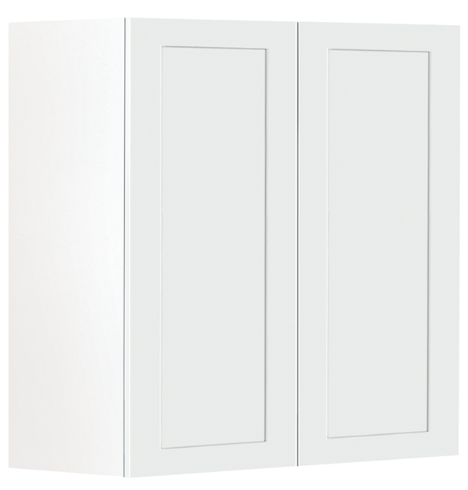
Stock Cabinets
Standard sizes are available for stock cabinets, which are pre-assembled and sold in kitchen centres or home improvement stores.
Advantages
- Economical
- Shorter lead time
- Ideal for limited budgets
- Made in standard heights
Features of Kitchen Cabinets
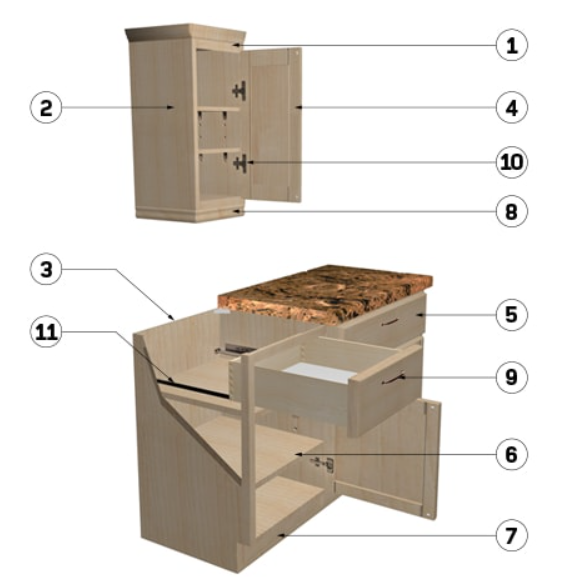
1: Face Fream
The front of a cabinet box with framed doors and drawers is surrounded by a frame composed of the same material. The box is stabilised by the frame. The hinges are directly attached to the frame and are visible here.
European-style, or frameless, cabinets have no frame surrounding the cabinet box; instead, the edges of the box are covered by the doors and drawers. For stability, the cabinet box’s side panels are made of thicker material. More storage space is available because the hinges are affixed directly to the side panels.
2: Cabinet Sides
Cabinet sides typically measure between ½” and ¾” thick. Usually unfinished, they are composed of one of the following materials:
1: Particleboard is frequently used to build cabinets, but it can bend and distort.
2: Although less costly than other materials, medium-density fibreboard (MDF) is vulnerable to water damage.
3: Plywood is a highly recommended material for cabinet construction because of its strength and longevity.
3: Cabinet’s bottom and rear panel
They provide the entire cabinet with support and guarantee its rigidity. A ½” plywood back panel will keep the cabinet from warping with time. For a base cabinet, however, a mere ¼” thick back panel will do, as it will not be utilised to secure the cabinet to the wall.
4: Cabinet Door
Cabinet doors come in two varieties: ones constructed from a single piece of material and ones that have an inner panel and a frame. The latter has a wood frame and a wood or MDF central panel that is finished to the desired look.
Humidity over time can cause wooden doors to warp or bend, despite their more elegant appearance. But neither the colour nor the surface will deteriorate.
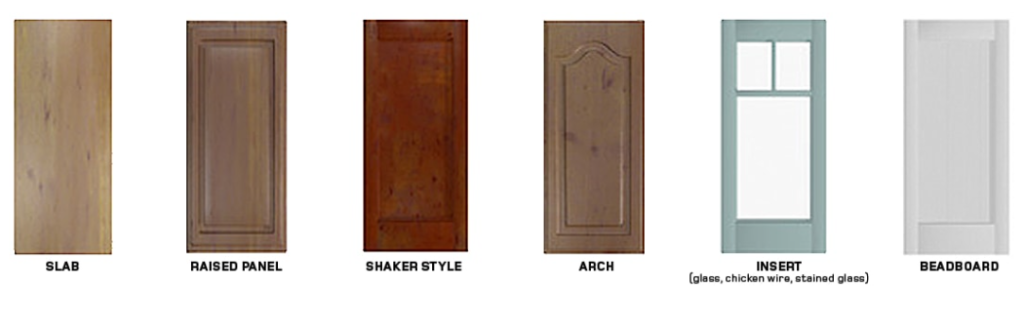
Six primary categories are used to group cabinet panels:
5: Drawers
It is crucial to take their durability and construction into account. Firstly, it’s crucial to understand that solid wood drawer sides range in thickness from 5/8″ to ¾”. Particleboard drawers aren’t the best long-term option because they are only ½” thick and more prone to warping. The best plywood for drawer bottoms is ¼”.
While wood drawers are the most common type, certain manufacturers also produce metal-sided models that work well with frameless cabinets.
Tendon and mortise joints
The tenon is the protruding peg on the other part that fits into the mortise, which is a square hole made in one part. The tenon can go through the mortise completely for an extra-sturdy structure, but the finished result might not be as beautiful.
Dovetail Joints
Robust, fine joinery method with exceptional resistance. Tenons with a trapezoidal shape are inserted into matching notches on the adjacent portion.
Dowelled Joint
This method makes use of circular wood dowels, or pegs, inserted into holes. A joint with a mortise and tenon design can also be strengthened with dowels.
Biscuit Joint
A biscuit, which is a piece of wood, is inserted into slots on the adjacent parts to create these joints. The biscuit swells and remains wedged in place due to the humidity in the glue, forming a strong bond. The use of this simple, fast method is growing in the cabinet joinery industry.
Tongue and Groove joint
The projecting edge or tongue of the adjacent piece slots into a channel or groove that is cut along the length of one piece for this joint.
6: Shelf
Shelves can be pull-out or fixed, and they are usually constructed of particleboard, MDF, or plywood that has been covered in a layer of laminate or wood veneer. While shelf thickness varies among manufacturers and may also depend on customer specifications, standard measurements are ½”, 5/8″, and ¾”.
The shelf is less likely to give way under weight the thicker it is. Nonetheless, it’s critical that the cabinet’s sides be sufficiently thick to support the weight if the shelf is intended to hold bulky objects like preserves and cans.
7: Toe Scuff
When cooking, you can stand closer to the countertop thanks to the toe kick, a recessed area for your feet. It is typically 3″ deep and 3 ½” high, but wheelchair users can make it as high as 10″.
The toe kick can incorporate features like extra drawers or even a central vacuum inlet. To improve the look, decorative feet can also be added to the end of a row of cabinets.
8: Decorative fillers and mouldings
Depending on the desired style, decorative mouldings, corbels, mosaics, or columns can improve the appearance of cabinets. Your kitchen can be totally transformed with this final touch.
9: Pull, Knobs and Pendants
Knobs, pendants, and drawer and cabinet pulls all complement and unify the kitchen’s overall design.
1: Two screws are used to secure pulls. They come in an extensive range of styles to complement any decor.
2: One screw is used to secure knobs. They are mostly used as accent pieces.
3: Handles with a revolving back plate are pendants. These go well with more lavish decor.
10: Hinges
Your choice of cabinet hinge will mostly depend on the kind of cabinet you have, as there are many different kinds available. Some hinges have soft-close features, which are useful for households with young children.
When the cabinet doors are closed, exposed hinges may be seen all the way around.
- When the doors are closed, concealed hinges are hidden. The majority of them are movable.
- In order for the wings of a mortise hinge to sit flush with the surface, a mortise (notch) must be cut into the cabinet frame.
- No-mortise hinges fasten the wings straight to the cabinet surface; no mortise needs to be cut in the cabinet frame.
- The door can swing fully out of the opening thanks to swing-clear hinges, giving you unhindered access to the cabinet’s interior.
11: Drawer Slides
Full extension slides allow the drawer to be fully pulled out for more convenient access. A convenient soft-close mechanism that enables the drawer to close gently and smoothly is installed in certain slides.
Loads weighing up to 75–100 pounds can be supported by drawer slides. If pots and pans or small appliances are to be stored in the drawer, select slides that have a greater weight capacity.
1: Slides with ball bearings are durable, easy to use, and stable. The drawer has slides installed on both sides.
2: The load-carrying capacity of the drawer is increased by the undermount slides installed underneath it. 3: They offer outstanding stability and support.
4: Although side-mount slides offer limited access to the drawer’s back, they do offer good support.
Wide Selection of Material
Wood, wood veneer, glass, thermoplastic, melamine, laminate, and lacquer… Every kind of material has benefits, regardless of the design style—rustic, modern, or traditional.
Kitchen Cabinets – Stone and Home – Shop Online
-
Product on sale
 White Shaker U-Shaped Kitchen 10×10$4,199.99
$6,299.99 -
Product on sale
 White Shaker 36” Base Kitchen Cabinet$360.59
$410.59 -
Product on sale
 White Shaker 33” Base Kitchen Cabinet$237.43
$287.43 -
Product on sale
 White Shaker 30” Base Kitchen Cabinet$319.93
$369.93 -
Product on sale
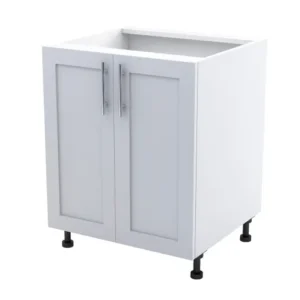 White Shaker 27” Base Kitchen Cabinet$298.53
$348.53 -
Product on sale
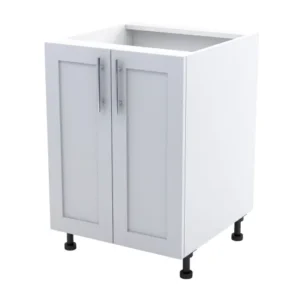 White Shaker 24” Base Kitchen Cabinet$280.34
$330.34 -
Product on sale
 White Shaker 21” Base Kitchen Cabinet$255.73
$305.73 -
Product on sale
 White Shaker 18” Base Kitchen Cabinet$236.47
$286.47 -
Product on sale
 White Shaker 15” Base Kitchen Cabinet$150.54
$200.54